This website is for the original EmulationStation, last updated in 2015!

A graphical and themeable emulator front-end that allows you to access all your favorite games in one place, even without a keyboard!
This website is for the original EmulationStation, last updated in 2015!
A graphical and themeable emulator front-end that allows you to access all your favorite games in one place, even without a keyboard!
In the collective imagination, the LGBTQ+ community is often symbolized by a single, sweeping rainbow. Yet, beneath that broad, colorful arc lies a tapestry of distinct histories, struggles, and triumphs. At the heart of this tapestry, woven inextricably into its very fabric, is the transgender community.
Names like (a self-identified drag queen, trans activist, and sex worker) and Sylvia Rivera (a Latina trans woman and founder of STAR—Street Transvestite Action Revolutionaries) are no longer footnotes; they are now recognized as the founding mothers of the modern queer rights movement. Rivera famously said, "We have to be visible. We should not be ashamed of who we are."
This era brought unprecedented visibility, but visibility is a double-edged sword. On one hand, trans narratives entered mainstream art, fashion, and television. On the other hand, the transgender community became the primary political target for conservative movements. While same-sex marriage became legal in many Western nations, hundreds of anti-trans bills were introduced in US state legislatures, targeting trans youth in sports, healthcare, and public facilities. young shemale teens free
To understand modern LGBTQ culture, one must understand trans history. Conversely, to appreciate the specific challenges of trans people today, one must understand the broader queer ecosystem that has both supported and, at times, fragmented around them. This article explores the profound, complex, and evolving relationship between the transgender community and LGBTQ culture—a bond forged in rebellion, tested by inclusion, and vital for the future of human rights. The popular narrative of the modern LGBTQ rights movement often begins on June 28, 1969, at the Stonewall Inn in New York City’s Greenwich Village. While gay men and lesbians were certainly present, the catalysts of the uprising were the marginalized of the marginalized: transgender women, drag queens, and gender-nonconforming people of color.
This divergence left the transgender community in a precarious position. They lost access to funding, political advocacy, and safe spaces. In response, the trans community built its own infrastructure: grassroots health clinics (like the Callen-Lorde Community Health Center), legal defense funds (like the Transgender Law Center), and cultural institutions. However, this separation had a silver lining: it forced the trans community to develop a unique, autonomous culture separate from LGB identity—one centered on self-actualization, bodily autonomy, and the rejection of binary norms. The 2010s and 2020s witnessed the explosive re-emergence of the transgender community into the center of global LGBTQ culture. Spurred by high-profile figures like Laverne Cox ( Orange is the New Black ), Janet Mock , and Elliot Page , the "T" forcibly reclaimed its place within the acronym. In the collective imagination, the LGBTQ+ community is
We are currently in an era of "gender complexity." The rise of non-binary and genderfluid identities (like Demi Lovato, Sam Smith, and Jonathan Van Ness) has blurred the line between "trans" and "gender non-conforming." Many young people who identify as queer no longer see a strict border between sexuality and gender. For Gen Z, questioning gender is often the first step into LGBTQ identity, even if they never medically transition.
This presents a challenge and an opportunity. The challenge is to avoid conflating "trans" with "androgyny" or "dressing differently." Medical, binary trans people (those who transition from male to female or female to male) have specific needs regarding surgery, hormones, and legal documentation that differ from non-binary people. The opportunity, however, is the creation of a truly expansive culture that can hold all these experiences. The relationship between the transgender community and LGBTQ culture is not static; it is a living argument. It is an argument about who belongs, what freedom looks like, and how we fight. From the bricks thrown at Stonewall by Marsha P. Johnson to the petitions signed against trans healthcare bans today, the trans community has never been a separate wing of the queer movement—it has often been the engine. Names like (a self-identified drag queen, trans activist,
Keywords integrated: transgender community, LGBTQ culture, Stonewall, Marsha P. Johnson, Sylvia Rivera, Ballroom, intersectionality, Transgender Day of Remembrance, non-binary, respectability politics.
EmulationStation provides an interface that is usable with any 4-button controller, set up from within the program itself.
* Emulators themselves must be configured separately...for now.


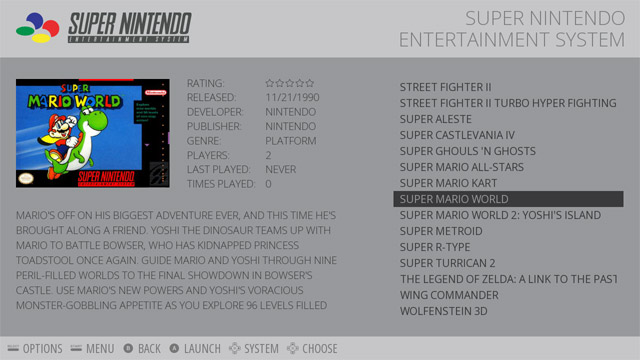
EmulationStation includes a custom theming system that gives you control over how each screen looks on a per-system basis, from the system select screen to the game list.
Don't like our style? Try another set, or make your own!
Download the full name, description, box art, rating, release date, developer, publisher, genre, and number of players for every game in your library with the press of a button.

You can download an installer below.
The installer will install a pre-compiled
EmulationStation executable and a set of themes.
Or, you can build EmulationStation yourself!
Browse on GitHub »Remember, you need to configure EmulationStation to use your emulators!
You can read more about how to do that on the Getting Started page.


