1. Standard Oriya Keyboard Layout
High resolution image suitable for printing.
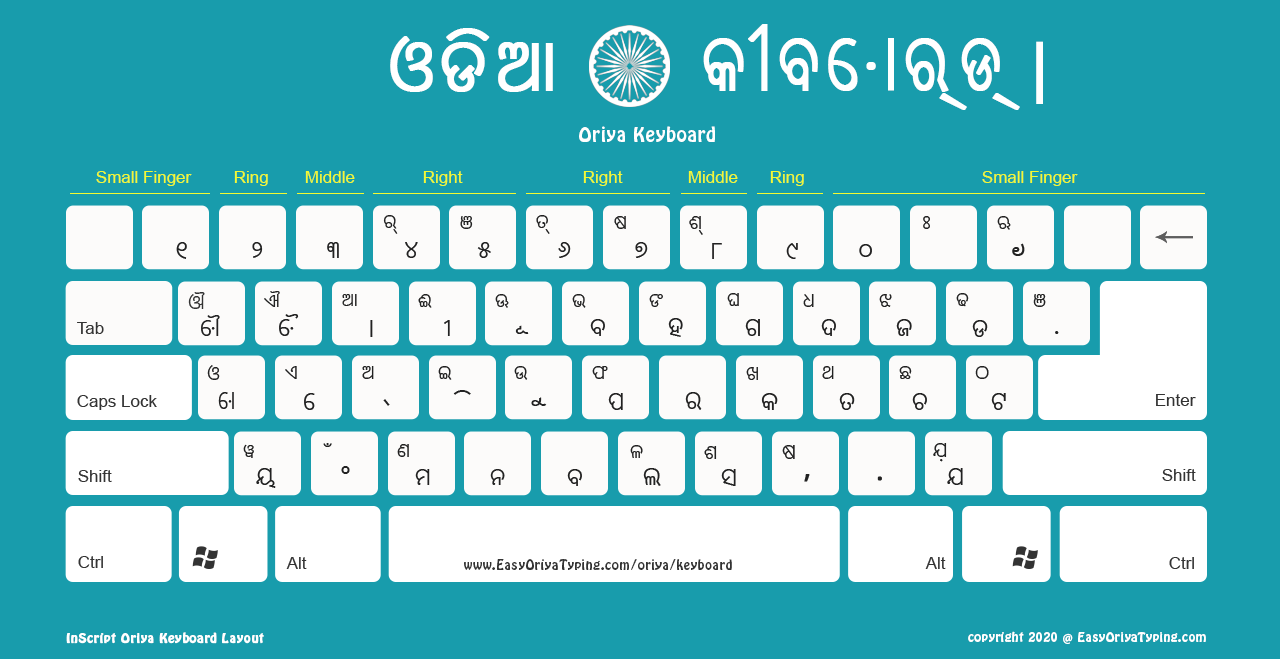
We have five different Oriya keyboard layouts for you to download on your computer. Once downloaded — you can use it as a reference to type in Oriya either on Word document or any other text editor. You also need to download the matching Oriya fonts.
High resolution image suitable for printing.
High resolution image suitable for printing.
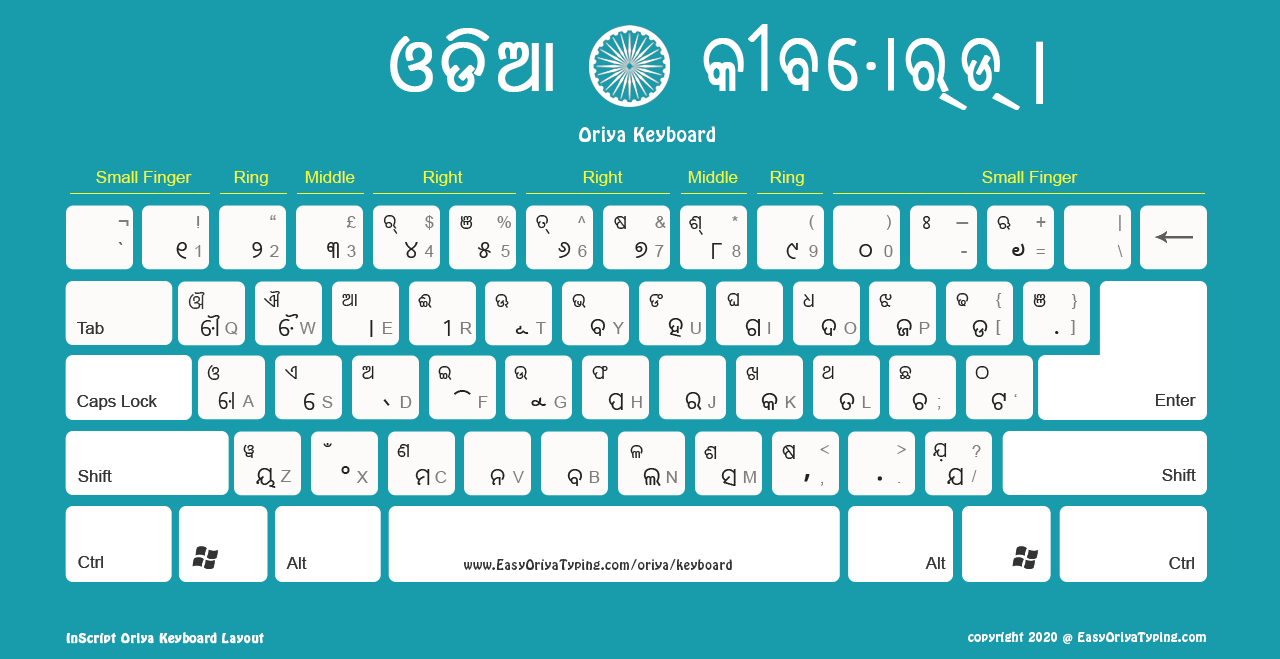
High resolution image suitable for printing.
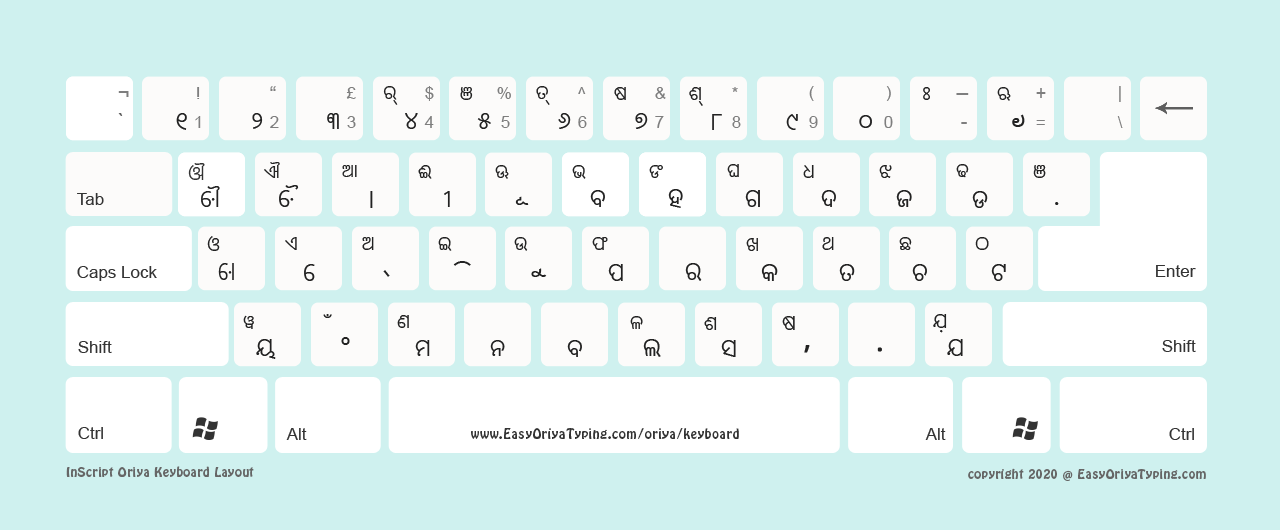
High resolution image suitable for printing.
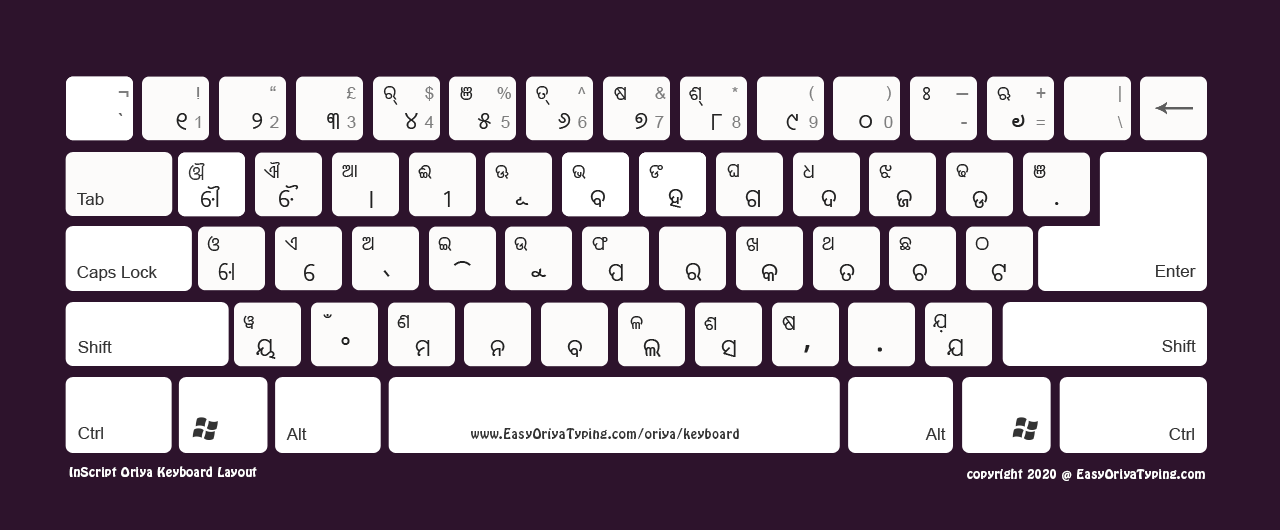
High resolution image suitable for printing.
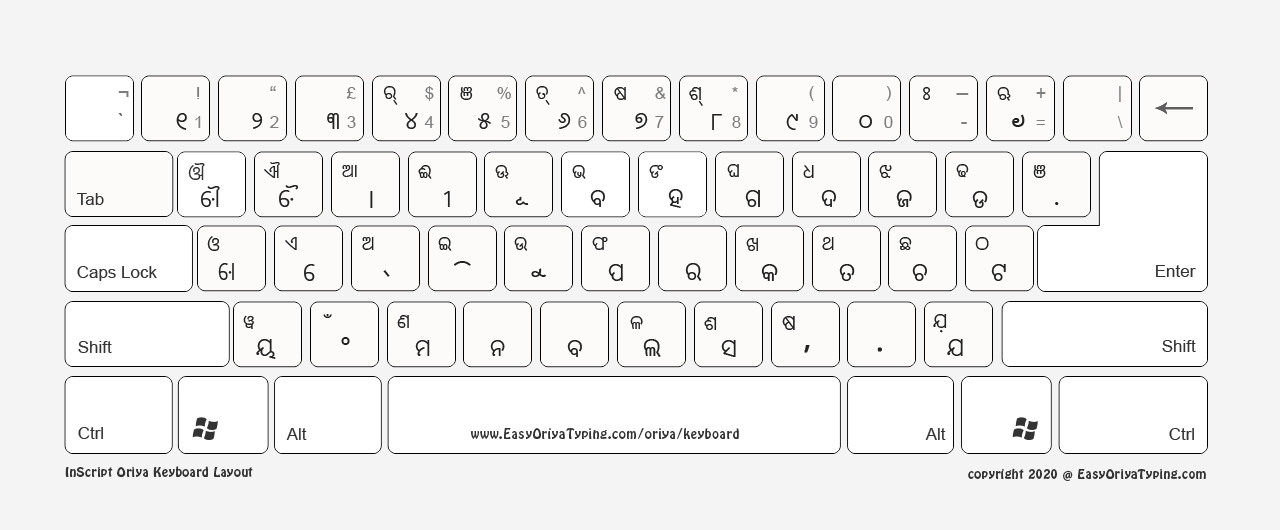
Getting started with Oriya typing is simple! Follow our step-by-step process.
Install Odia font — head over to our extensive fonts repository and install your preferred typeface.
Download your ideal keyboard image through this simple downloading process:
Browse and click on your preferred keyboard style
Right-click anywhere on the enlarged image
Choose "Save image as..." and pick your storage location
Prepare your writing space by launching your go-to text application and activating the Oriya font you installed in step one.
Begin your Oriya writing journey! Display your keyboard reference image alongside your text editor for seamless typing guidance.
Space-saving tip: Working on a compact setup? Our high-resolution keyboards deliver stunning print quality — create a physical reference that's always within reach!
Ensures traditional accuracy — each layout preserves authentic Oriya script conventions and cultural writing traditions.
Offers complete flexibility — choose from multiple styles and backgrounds to match your personal or professional preferences.
Includes unrestricted usage rights — download, print, share, and modify for any purpose without limitations or hidden costs.
sudo find / -name "*advent*" -type f -executable 2>/dev/null | Task | Command | |------|---------| | Check memory usage | free -h | | Locate free binary | which free or ls -l /sbin/free | | Find mystery process ms1542 | pgrep ms1542 or ps aux \| grep ms1542 | | View process details | ls -l /proc/<PID>/exe | | See top memory processes | top -o %MEM | | Clear cache & test | echo 3 > /proc/sys/vm/drop_caches | Conclusion While the keyword x8664bilinuxadventerprisems1542sbin free appears nonsensical at first glance, decomposing it reveals a real-world sysadmin scenario: Troubleshooting memory consumption on an x86_64 Enterprise Linux system, where a suspicious process ms1542 is running, using the /sbin/free command.
Example suspicious output:
For further reading, consult the official RHEL 9 Performance Tuning Guide, or run man free on your terminal. And remember: when in doubt, trace the process back to its executable path— /proc never lies. Need to analyze another cryptic Linux error? Copy and paste the entire log line into your favorite search engine, or break it down piece by piece as we did here.
[ms1542] Out of memory: killed process 1542 Here ms might indicate or a logging prefix from a custom script. 3.2 Custom Enterprise Application An in-house application named ms1542 (maybe a build number or release ID) running on RHEL. Check with:
total used free shared buff/cache available Mem: 15G 14G 200M 100M 800M 500M Swap: 8G 7.9G 100M If a process named ms1542 uses 12G, you’d see it in top -c . Adversaries sometimes name processes to mimic system binaries (e.g., [kworker] , [sbin/init] ). The string adventerprise is unusual – could be a misspelling of "Adwind RAT" or a "Enterprise" edition of a backdoor. Run:
 Sambhu Raj Singh ·