For decades, veterinary science focused primarily on the physiological—the broken bone, the infected tooth, the abnormal blood panel. However, a quiet but powerful revolution is currently reshaping the examination room. Today, understanding why an animal acts a certain way is no longer a niche specialization; it is a core competency of modern veterinary practice.
Owners are more likely to administer medication, clean wounds, and perform physical therapy when the animal is a willing participant rather than a restrained inmate. This reduces re-injury rates and improves chronic disease management. Part VI: The Future – AI, Biomechanics, and Welfare Science The cutting edge of animal behavior and veterinary science lies in technology. Wearable Tech Smart collars (FitBark, Whistle) track sleep patterns, scratching frequency, and grooming behavior. Algorithms can alert the vet that a dog is sleeping 20% more than usual—a potential early marker for hypothyroidism or osteoarthritis. Machine Learning for Facial Expression Researchers are training AI to read equine and feline facial expressions. The "Feline Grimace Scale" (ears flat, whiskers straight, muzzle tense) is now a validated tool for acute pain assessment. Soon, a smartphone app may allow an owner to photograph their cat and instantly gauge pain levels before deciding to drive to the emergency clinic. The One Welfare Concept Finally, veterinary science acknowledges that animal behavior, human well-being, and environmental health are linked. A veterinarian who understands the behavioral needs of a caged hen (dust bathing, perching) can prevent feather pecking—which reduces the need for antibiotics—which prevents antimicrobial resistance in humans. Conclusion: A Call for Integration The separation between "medical vet" and "behaviorist" is an artificial divide. Every vaccine, surgery, and prescription pad comes with a behavioral context. videos de zoofilia gays abotonados por perros portable
Keywords integrated: Animal behavior, veterinary science, low-stress handling, Fear-Free, ACVB, zoonotic diseases, cooperative care, feline grimace scale. For decades, veterinary science focused primarily on the
Whether you are a veterinarian, a veterinary technician, or a dedicated pet owner, the lesson is the same. Next time an animal acts "bad," don't ask who trained it . Ask what hurts it? What scares it? What does its brain need? Owners are more likely to administer medication, clean
Just as a fever indicates infection, a change in behavior often indicates the presence of pain or disease long before a physical lump or lab abnormality appears. Veterinarians are trained to recognize that a dog who suddenly snaps when touched near the tail isn't "aggressive"—he likely has spinal pain. A cat who hides under the bed and stops using the litter box isn't "spiteful"—she may have feline lower urinary tract disease (FLUTD).
In equine veterinary science, a horse that refuses to jump or bucks under saddle was historically labeled "stubborn." Today, behaviorists and vets collaborate to rule out gastric ulcers, kissing spines (overlapping vertebrae), or lameness. Recognizing that aggression is often a manifestation of fear or pain saves lives and prevents misdiagnosis. Stress as a Pathological Agent Chronic stress alters physiology. In veterinary science, we measure cortisol levels, heart rate variability, and immune function. An animal living in a state of constant fear (separation anxiety, noise phobia) is not merely unhappy; they are medically compromised. These patients heal slower, have poorer vaccine responses, and are prone to stress-induced colitis or feline idiopathic cystitis. Part II: Low-Stress Handling (The New Standard of Care) Perhaps the most tangible application of behavior in the clinic is the rise of Low-Stress Handling techniques, pioneered by experts like Dr. Sophia Yin.
Add Sense for Chrome works in both the build-in Sense client and in mashups using the Capabilities APIs
Charts displayed with the API through getObject and visualization.show will be tagged.
Used app(s) will be displayed in the bottom right corner.
Properties and other buttons will work just as in the client.
If your mashup shows charts from more than one app, all will be listed.
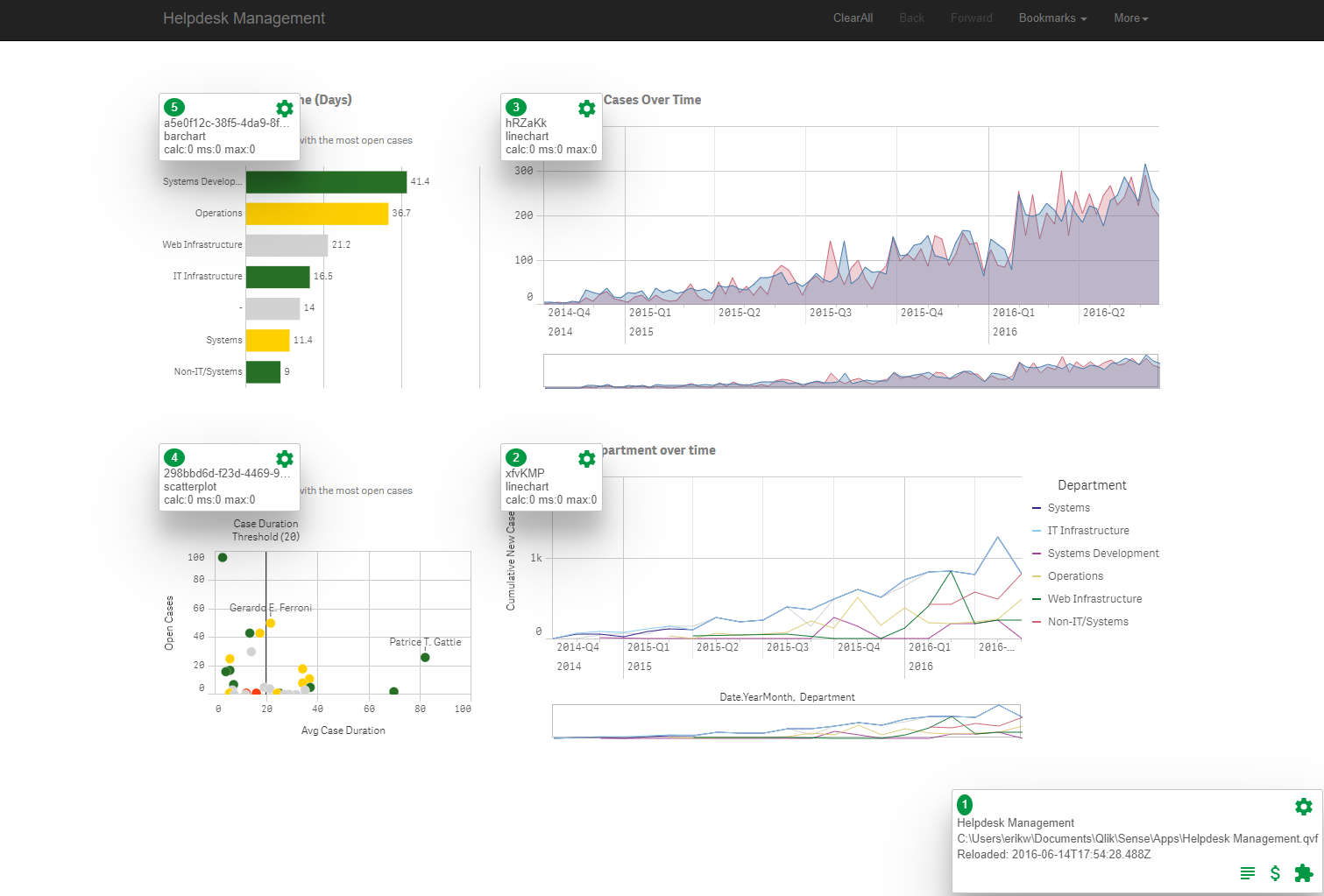
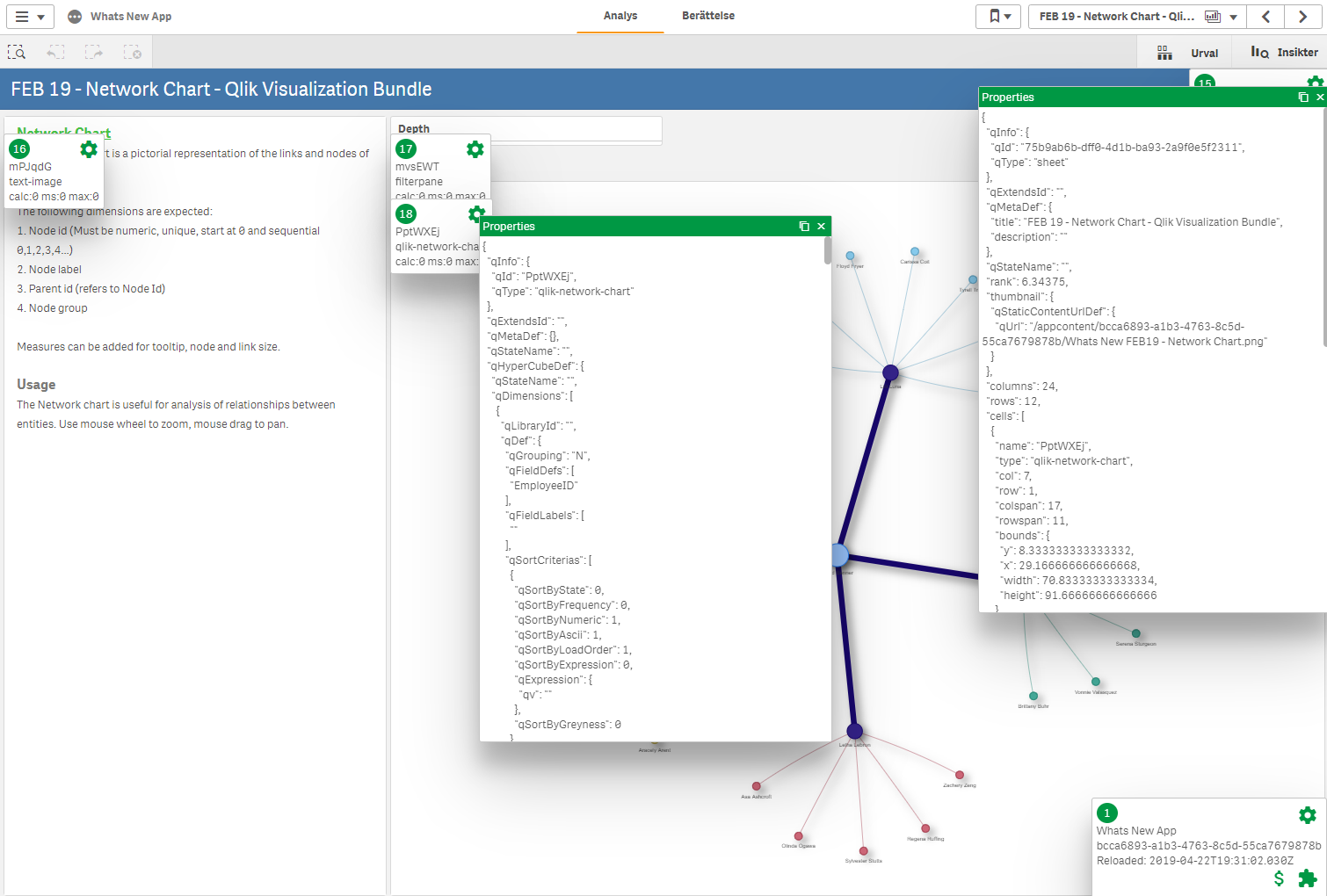
For all charts, sheets and the app you can click on the cogwheel.
That will display the properties for the object.
Use this to troubleshoot or to investigate what settings produce this chart.
You can display several objects properties at the same time, to make comparisons.
Properties can also be copied to clipboard.
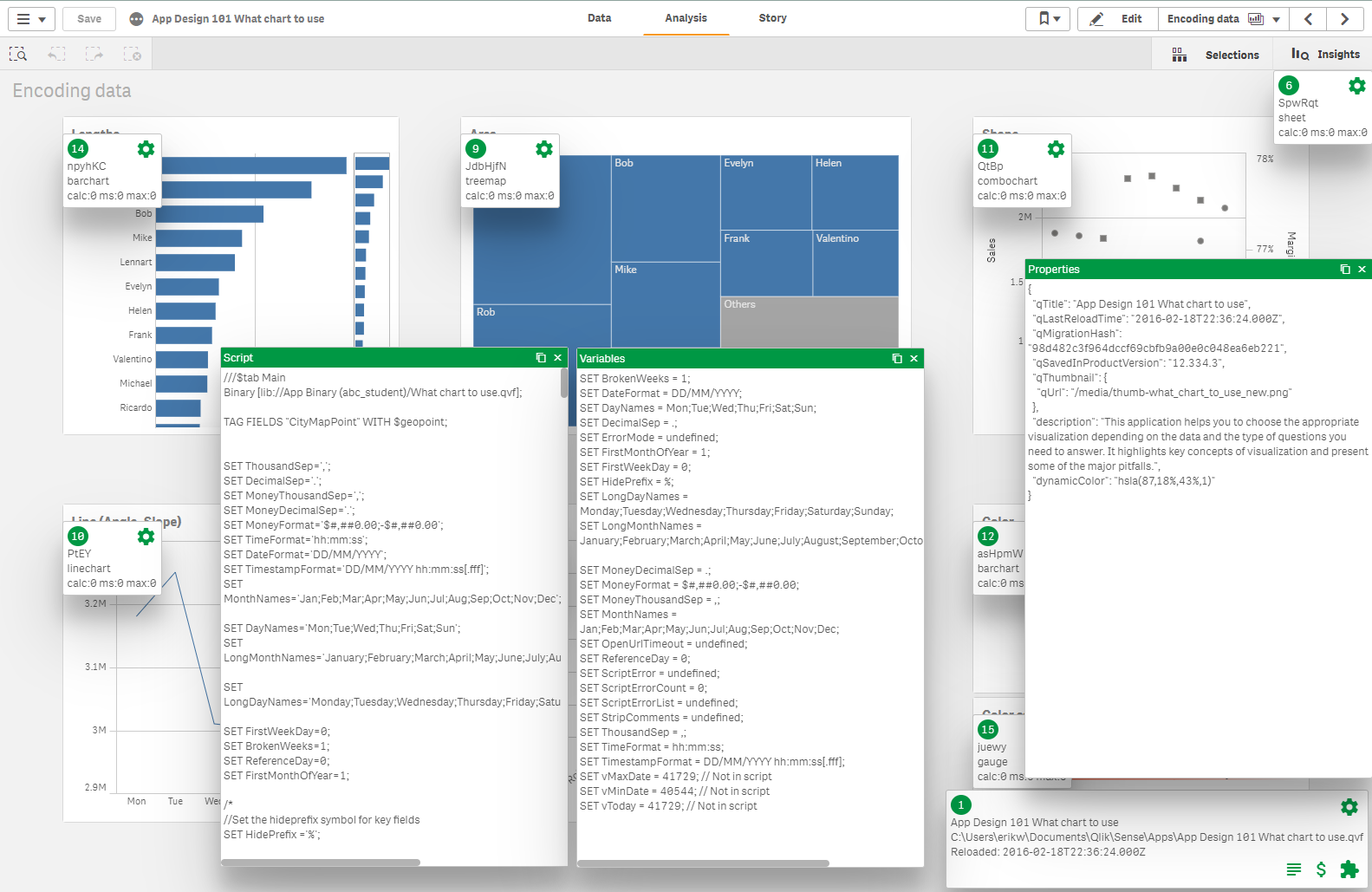
From the app box you can inspect the script, variables and app properties.
Windows can be open at the same time and moved.
You can also copy window contents, complete or partly, to the clipboard.
If you do not have access to the script the script button will not be available.
You can also easily see what extensions and charts are used in your app.
Just click on the extensions button in the app info box.
You will get a list of all axtensions and built-in charts are used in your extension, with title and sheet title
Master objects are also included.
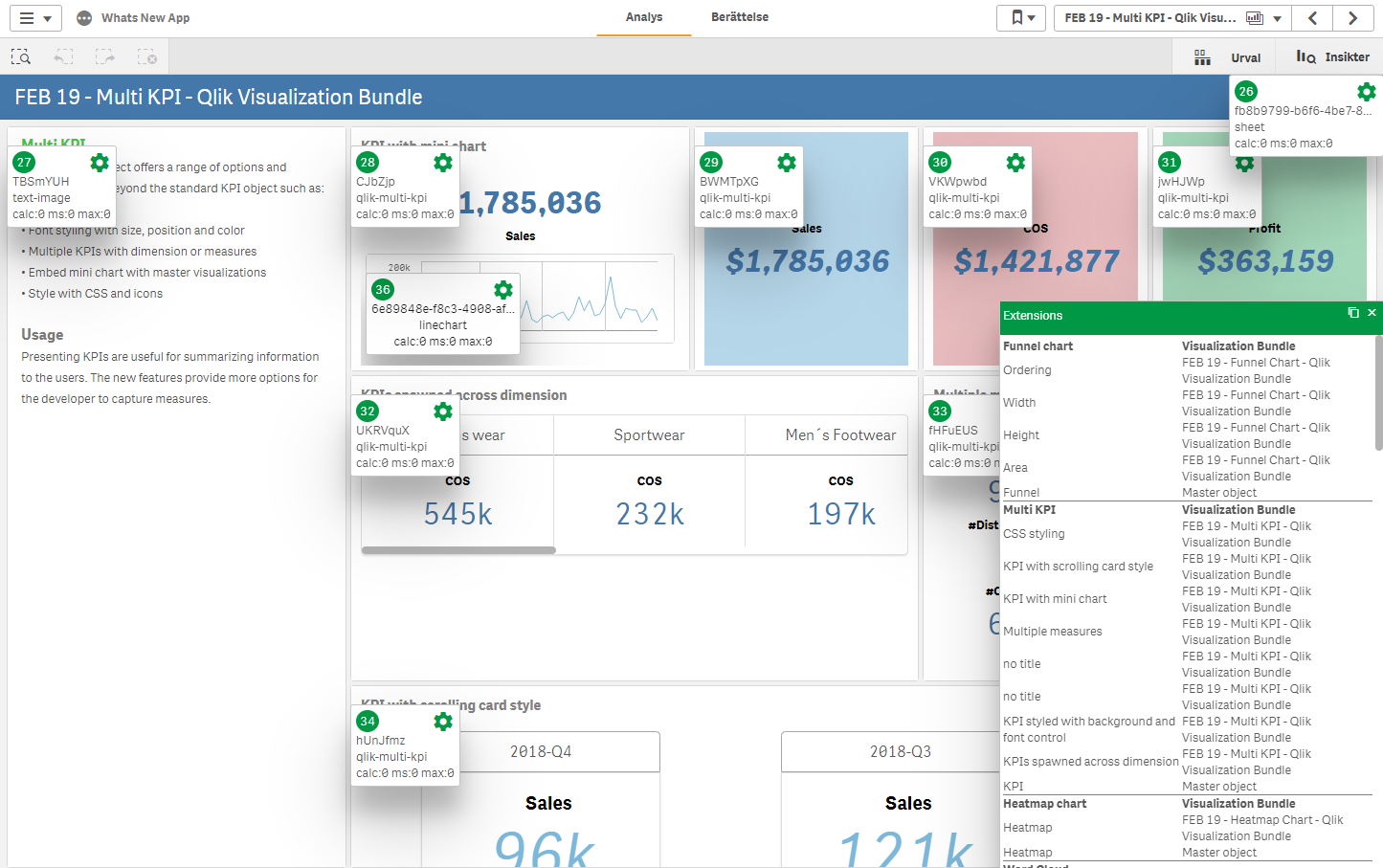
The extension can also help you find performance problems.
When you enable the extension on a page, whether it's the standard client or a mashup, it will start recording recalculation times.
Every time an object is revalidated then extension will register time elapsed for recalculation.
It will also count how many revalidations has occured.
If the object is no longer on the screen, the extension will continue to monitor recalculations, so when you re-enable it you will get all the statistics.