

**The "Red Wedding" effect (from Game of Thrones ) ** taught producers that shocking moments generate "social buzz," which is now a metric as important as Nielsen ratings. This has led to "meme-baiting"—writing scenes specifically designed to be clipped, gif’d, and shared across Twitter and Reddit.
For creators and consumers alike, the challenge is no longer access (everything is available) but curation (finding the signal in the noise). The platforms will change; the algorithms will update; the trends will fade. But the human hunger for story, spectacle, and shared experience remains the immutable engine of popular culture. Deeper.24.01.11.Blake.Blossom.Host.XXX.1080p.HE...
We are no longer passive viewers absorbing a broadcast; we are active participants in a hyper-saturated ecosystem. To understand the current cultural landscape, one must dissect the engines driving modern entertainment content and popular media: the streaming wars, the creator economy, algorithmic curation, and the blurred line between reality and intellectual property (IP). Twenty years ago, "popular media" was synonymous with a handful of cable channels and radio stations. Everyone watched the same Super Bowl commercials and discussed the same Friends episode the next morning. Today, that monoculture is dead—replaced by a fragmented diaspora of niche interests. **The "Red Wedding" effect (from Game of Thrones
Shows like Stranger Things and The Crown dominate the zeitgeist not through weekly appointment viewing, but through the "drop model." An entire season releases on a Friday, and by Saturday, social media is flooded with spoilers, memes, and fan theories. Entertainment content is no longer just a story; it is a live event that expires in 72 hours if you don't keep up. Perhaps the most radical change in popular media is the inversion of the power structure. Historically, content was produced by monolithic studios and distributed downward. Now, a teenager in their bedroom on YouTube or TikTok can command more cultural relevance than a legacy cable network. The platforms will change; the algorithms will update;
In the span of a single generation, the phrase "entertainment content and popular media" has transformed from a niche academic label into the very air we breathe. From the dopamine hit of a 15-second TikTok video to the immersive, weeks-long conversation sparked by a prestige television finale, the way we consume, interact with, and define media has undergone a seismic shift.
Streaming platforms (Netflix, Disney+, Max, Amazon Prime, and the rising FAST networks like Tubi and Pluto) have democratized access but created a paradox of choice. We spend more time scrolling through menus than watching content. Yet, this fragmentation has a silver lining: the rise of "binge culture."
As we scroll, tap, and binge into the next decade, one truth holds: We aren't just watching entertainment anymore. We are living inside it. Are you keeping up with the latest shifts in streaming algorithms and creator trends? Subscribe to our newsletter for weekly insights on entertainment content and popular media.
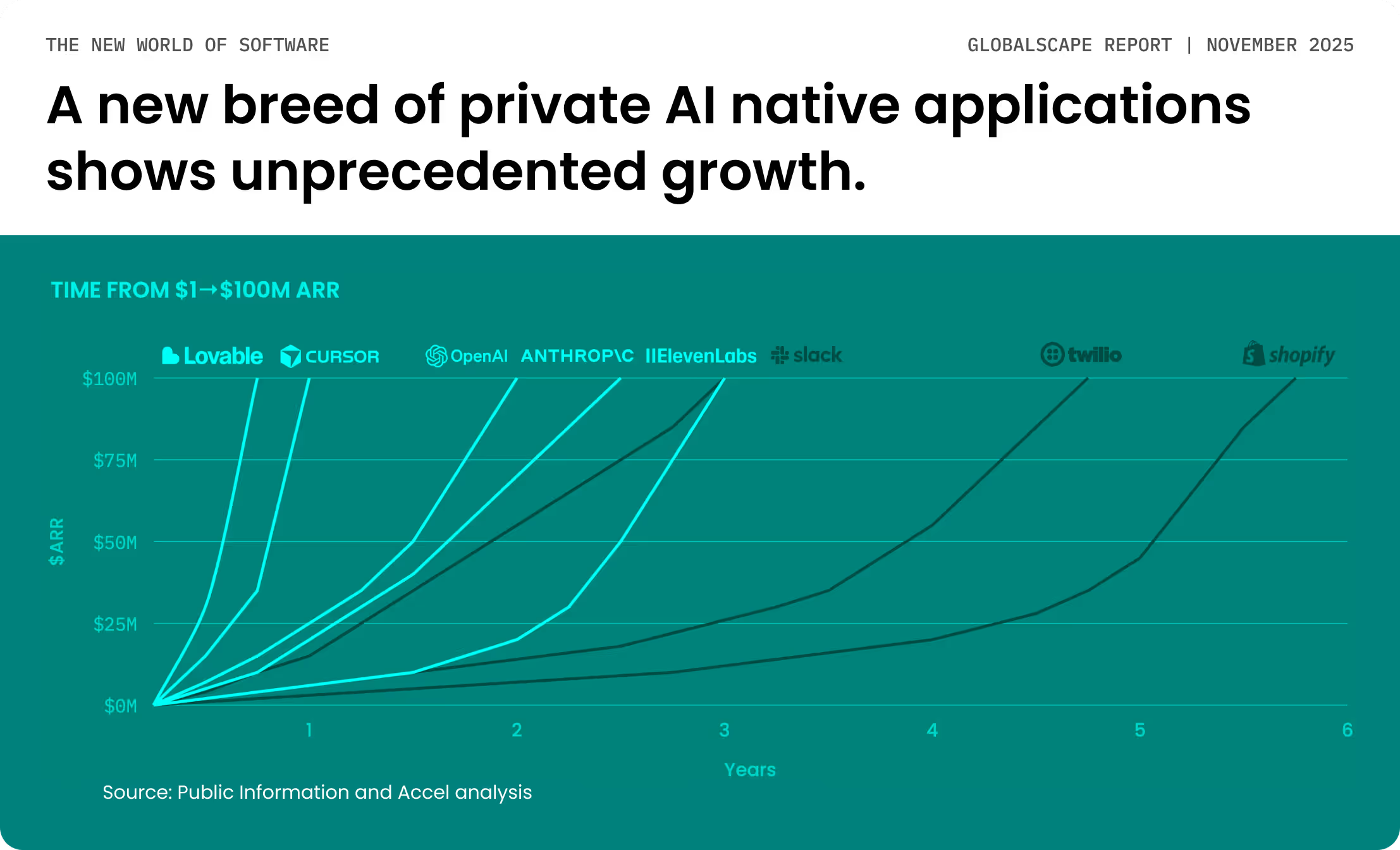
We are witnessing a tectonic shift, with AI accelerating innovation across the globe and unprecedented growth in AI native applications and enterprise agentic workflows. This shift will require an estimated $4 trillion investment in computing data centers over the next five years.
Report
Report
Report
Report
Report
Report
Report
Report