Build confidence, precision, and consistency — with the most advanced practice app for musicians. The app trusted by Broadway musicians, Juilliard students, and teachers worldwide.
Trusted by
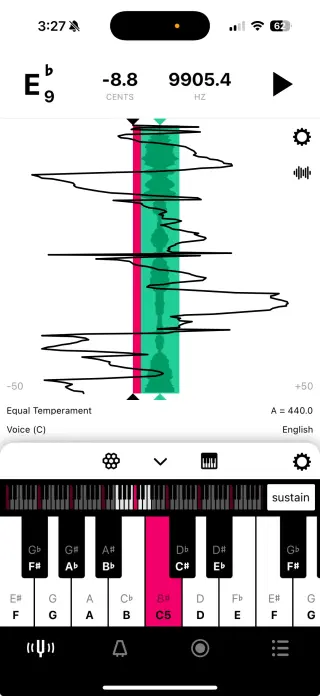
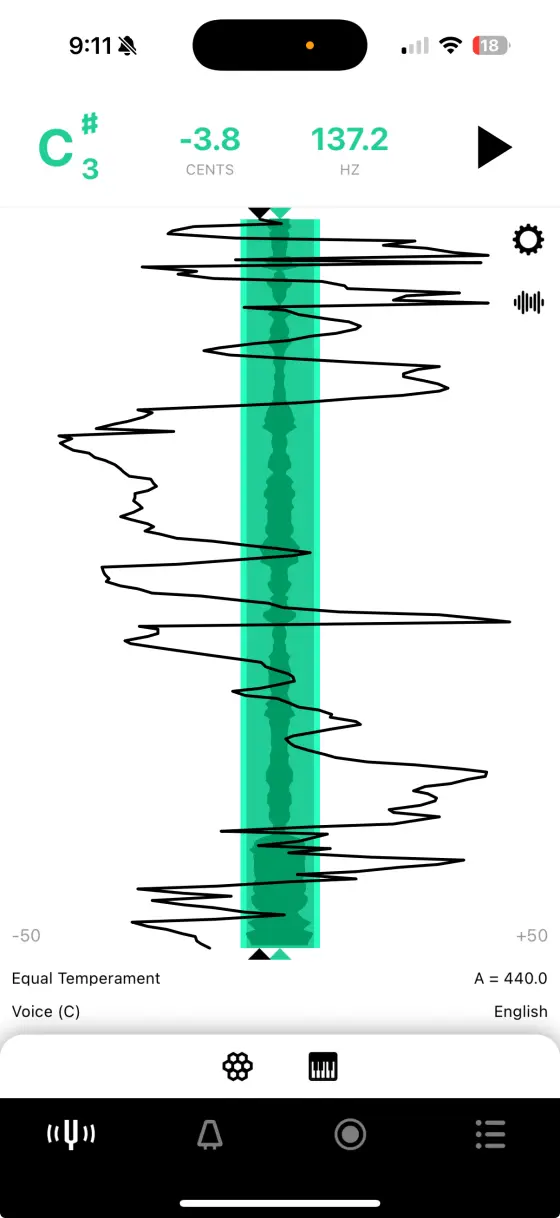
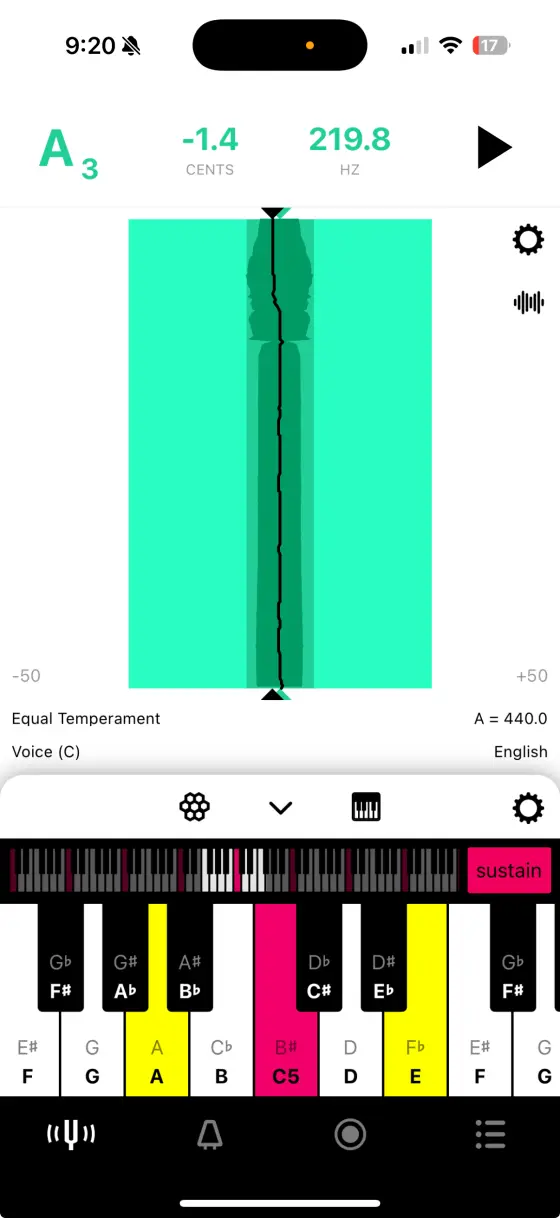
Tunable works with any instrument, from piccolo to tuba, guitar to voice. See every note in perfect clarity with Sustained Pitch History™ and detailed intonation analysis. Perfect for beginners and professionals alike.
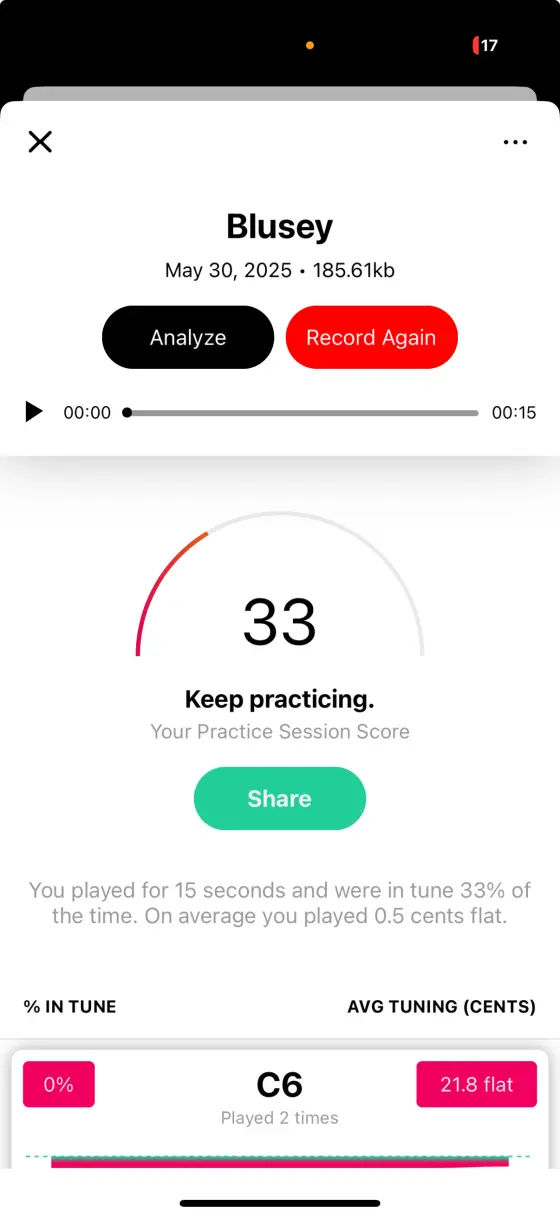
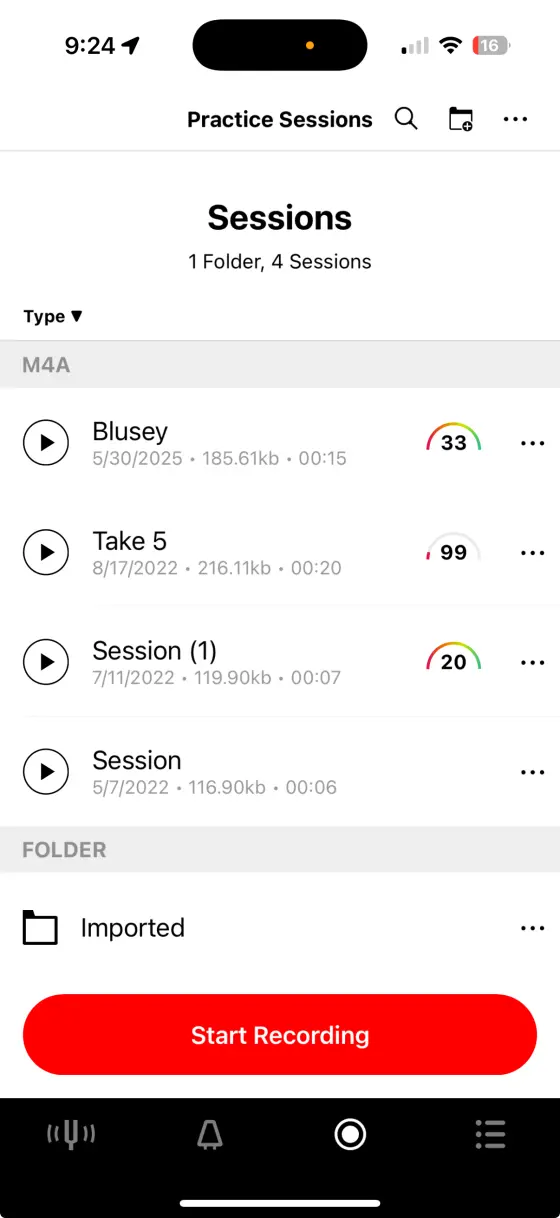
Track your practice sessions with detailed analytics and Practice Score™. See your improvement over time and identify areas that need more attention. Perfect for teachers and students alike.
Use the tone and chord generator to improve your intonation. Sustain notes and chords to hear the difference between them and play along them to train your ear.
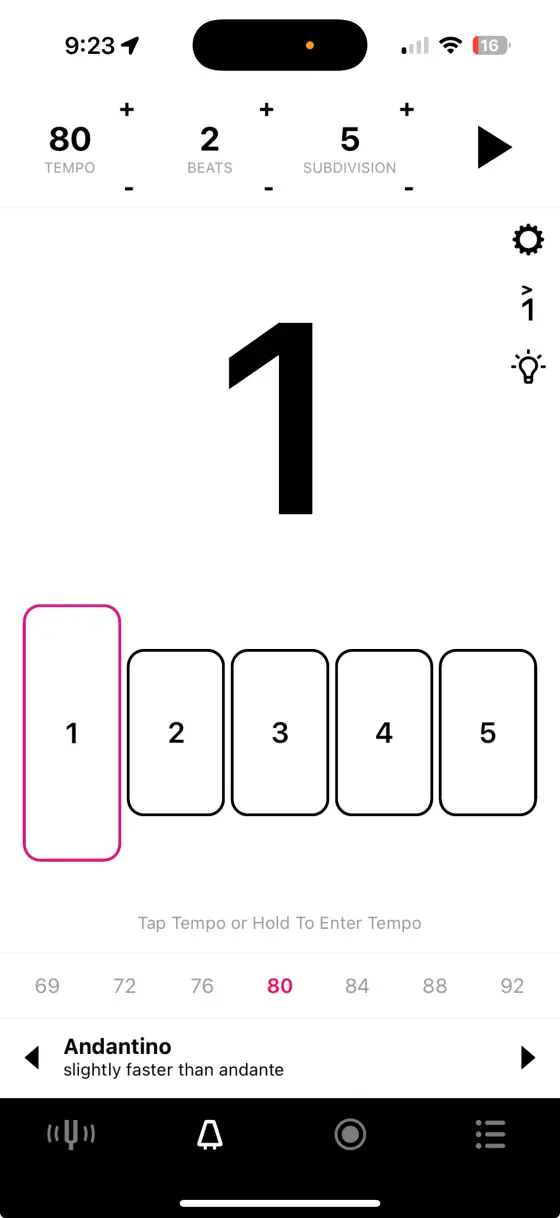
Use the advanced visual metronome with precise and multi-device synchronization* to keep time; perfect for individual and ensemble practice.
Capture your performances to share, improve, or listen to. Add studio-quality reverb and share recordings with teachers or review your progress. Perfect for audition prep.
Tunable grows with you. Start as a beginner, develop your skills, and join the ranks of professionals who rely on Tunable every day.
Build confidence with practice feedback and clear visual cues
Broadway musicians and Juilliard students trust Tunable for precision
Share recordings and track student progress with detailed analytics
At first glance, it looks like a hybrid of three distinct technologies: a Content Delivery Network (CDN), a subdomain ( cdn1.discovery ), and the File Transfer Protocol (FTP). But what does it actually refer to? Is it a vulnerability? A legacy system? Or a misunderstood piece of internet infrastructure?
Discovery Inc. (now Warner Bros. Discovery) likely operated a CDN node at cdn1.discovery.com that—at some point in the past—supported FTP for internal or partner use. Today, that service is probably decommissioned, firewalled, or redirecting to HTTPS. cdn1.discovery ftp
: Attempting to access or exploit any cdn1.discovery.com FTP service without explicit authorization is illegal under the Computer Fraud and Abuse Act (CFAA) in the US and similar laws globally. Part 5: How to Investigate the Keyword Safely and Legally If you have encountered cdn1.discovery ftp in your logs, SEO research, or network monitoring, here is a responsible approach to understanding it. 5.1 Passive Reconnaissance (No Direct Connection) Use DNS and WHOIS tools to resolve the domain and check its current state: At first glance, it looks like a hybrid
dig cdn1.discovery.com nslookup cdn1.discovery.com Check if the subdomain resolves at all. Many legacy CDN nodes are decommissioned but may still have stale DNS records. If you are authorized to scan (e.g., you are a security professional auditing your own network), use tools like nmap to see if port 21 (FTP) is open: A legacy system
In the sprawling digital ecosystem of the internet, certain technical terms and strings of text occasionally surface that pique the curiosity of IT professionals, network administrators, and digital forensics experts. One such enigmatic keyword is "cdn1.discovery ftp" .
This article dives deep into the anatomy of cdn1.discovery ftp , exploring its potential meanings, technical underpinnings, security implications, and its place in the broader context of modern content delivery. To understand the whole, we must first break down the keyword into its constituent parts. 1.1 The cdn1 Subdomain The prefix cdn1 is a near-universal naming convention used by organizations to designate the first (or primary) server in a Content Delivery Network . A CDN is a geographically distributed network of proxy servers designed to deliver content—web pages, videos, images, software updates—to end-users with high availability and low latency.
nmap -p 21 cdn1.discovery.com Remember: Scanning domains you do not own may violate terms of service or local laws. Use services like Wayback Machine (archive.org) to see if cdn1.discovery.com/ftp ever hosted public files. This can confirm whether it was once a legitimate endpoint. 5.4 Search Code Repositories Public GitHub or GitLab repositories sometimes contain hardcoded references to cdn1.discovery.com/ftp in legacy configuration files. Searching these can provide context without interacting with the live server. Part 6: Alternatives & Evolution – What Replaced CDN+FTP? The modern internet has largely moved away from the cdn1.discovery ftp model for several compelling reasons: 6.1 HTTP/2 and HTTP/3 with TLS Modern CDNs (Cloudflare, Akamai, Fastly) exclusively use HTTPS for content delivery. HTTP/2 and HTTP/3 offer multiplexing, header compression, and built-in security—far superior to FTP. 6.2 Object Storage with Signed URLs Instead of FTP uploads, companies now use S3-compatible object storage. Uploads are performed via REST APIs, and downloads use time-limited, signed URLs served through the CDN. 6.3 Managed File Transfer (MFT) Solutions For B2B file exchange, MFT platforms (e.g., GoAnywhere, MOVEit) provide encrypted, auditable transfers over SFTP, FTPS, or AS2—never raw FTP. 6.4 The Decline of the cdn1 Naming Convention Modern infrastructure treats servers as ephemeral. Instead of cdn1.discovery.com , cloud-native CDNs use random or regional hostnames (e.g., a248.e.akamai.net , d2g8igdw93xqkj.cloudfront.net ). Part 7: Conclusion – The Verdict on "cdn1.discovery ftp" After thorough analysis, here is the most likely reality of the keyword cdn1.discovery ftp :

At first glance, it looks like a hybrid of three distinct technologies: a Content Delivery Network (CDN), a subdomain ( cdn1.discovery ), and the File Transfer Protocol (FTP). But what does it actually refer to? Is it a vulnerability? A legacy system? Or a misunderstood piece of internet infrastructure?
Discovery Inc. (now Warner Bros. Discovery) likely operated a CDN node at cdn1.discovery.com that—at some point in the past—supported FTP for internal or partner use. Today, that service is probably decommissioned, firewalled, or redirecting to HTTPS.
: Attempting to access or exploit any cdn1.discovery.com FTP service without explicit authorization is illegal under the Computer Fraud and Abuse Act (CFAA) in the US and similar laws globally. Part 5: How to Investigate the Keyword Safely and Legally If you have encountered cdn1.discovery ftp in your logs, SEO research, or network monitoring, here is a responsible approach to understanding it. 5.1 Passive Reconnaissance (No Direct Connection) Use DNS and WHOIS tools to resolve the domain and check its current state:
dig cdn1.discovery.com nslookup cdn1.discovery.com Check if the subdomain resolves at all. Many legacy CDN nodes are decommissioned but may still have stale DNS records. If you are authorized to scan (e.g., you are a security professional auditing your own network), use tools like nmap to see if port 21 (FTP) is open:
In the sprawling digital ecosystem of the internet, certain technical terms and strings of text occasionally surface that pique the curiosity of IT professionals, network administrators, and digital forensics experts. One such enigmatic keyword is "cdn1.discovery ftp" .
This article dives deep into the anatomy of cdn1.discovery ftp , exploring its potential meanings, technical underpinnings, security implications, and its place in the broader context of modern content delivery. To understand the whole, we must first break down the keyword into its constituent parts. 1.1 The cdn1 Subdomain The prefix cdn1 is a near-universal naming convention used by organizations to designate the first (or primary) server in a Content Delivery Network . A CDN is a geographically distributed network of proxy servers designed to deliver content—web pages, videos, images, software updates—to end-users with high availability and low latency.
nmap -p 21 cdn1.discovery.com Remember: Scanning domains you do not own may violate terms of service or local laws. Use services like Wayback Machine (archive.org) to see if cdn1.discovery.com/ftp ever hosted public files. This can confirm whether it was once a legitimate endpoint. 5.4 Search Code Repositories Public GitHub or GitLab repositories sometimes contain hardcoded references to cdn1.discovery.com/ftp in legacy configuration files. Searching these can provide context without interacting with the live server. Part 6: Alternatives & Evolution – What Replaced CDN+FTP? The modern internet has largely moved away from the cdn1.discovery ftp model for several compelling reasons: 6.1 HTTP/2 and HTTP/3 with TLS Modern CDNs (Cloudflare, Akamai, Fastly) exclusively use HTTPS for content delivery. HTTP/2 and HTTP/3 offer multiplexing, header compression, and built-in security—far superior to FTP. 6.2 Object Storage with Signed URLs Instead of FTP uploads, companies now use S3-compatible object storage. Uploads are performed via REST APIs, and downloads use time-limited, signed URLs served through the CDN. 6.3 Managed File Transfer (MFT) Solutions For B2B file exchange, MFT platforms (e.g., GoAnywhere, MOVEit) provide encrypted, auditable transfers over SFTP, FTPS, or AS2—never raw FTP. 6.4 The Decline of the cdn1 Naming Convention Modern infrastructure treats servers as ephemeral. Instead of cdn1.discovery.com , cloud-native CDNs use random or regional hostnames (e.g., a248.e.akamai.net , d2g8igdw93xqkj.cloudfront.net ). Part 7: Conclusion – The Verdict on "cdn1.discovery ftp" After thorough analysis, here is the most likely reality of the keyword cdn1.discovery ftp :

Join millions of musicians who practice with confidence. Download Tunable and discover what you're truly capable of.