Basics


Info Download

Advanced

v/v
V
V

Plot Download

| Feature | AAXI V1.8 | Bliss OS Installer | Official ISO Method | | :--- | :--- | :--- | :--- | | | Excellent | Good | None | | NTFS support | Yes | Limited | No | | UEFI/Secure Boot | Partial (with tweaks) | Full | Manual only | | Uninstaller | Yes | Yes | No (manual partition delete) | | Ease of use | Very Easy | Moderate | Complex |

In the ever-evolving landscape of operating systems, the line between mobile and desktop computing continues to blur. For years, enthusiasts and developers have sought a seamless way to run Android on standard x86 hardware (Intel/AMD processors). While official projects like Android-x86 have made this possible, the traditional installation process—involving partitioning, GRUB bootloader configuration, and ISO burning—has remained a daunting barrier for the average user.

Enter the . This tool has revolutionized how we install Android on PCs and tablets. It is the missing bridge between the complex world of Linux-based bootloaders and the user-friendly environment of Windows.

bcdedit /set android path \Android\android.boot (Note: android should be the specific identifier shown in bcdedit /enum ). Fix: The Android-x86 project has limited driver support. Use an Ethernet-to-USB adapter or external USB Wi-Fi dongle (Chipset: Realtek RTL8188EU works well). For audio, try using Bluetooth headphones. Advanced Android-x86 Installer V1.8 vs. Competitors How does V1.8 stack up against modern alternatives?

Perform a safe search for "Advanced Android-x86 Installer for Windows V1.8 download" on GitHub or SourceForge, grab your favorite Android ISO, and get started today. Have questions or success stories? Share them in the XDA-Developers forum thread dedicated to this installer. Happy dual-booting!
Disclaimer: This tool is provided for educational and illustrative purposes only. No guarantee is made regarding accuracy, suitability, or performance. Use at your own risk. - Copyright: ufelectronics.eu / Andreas Dyhrberg

×
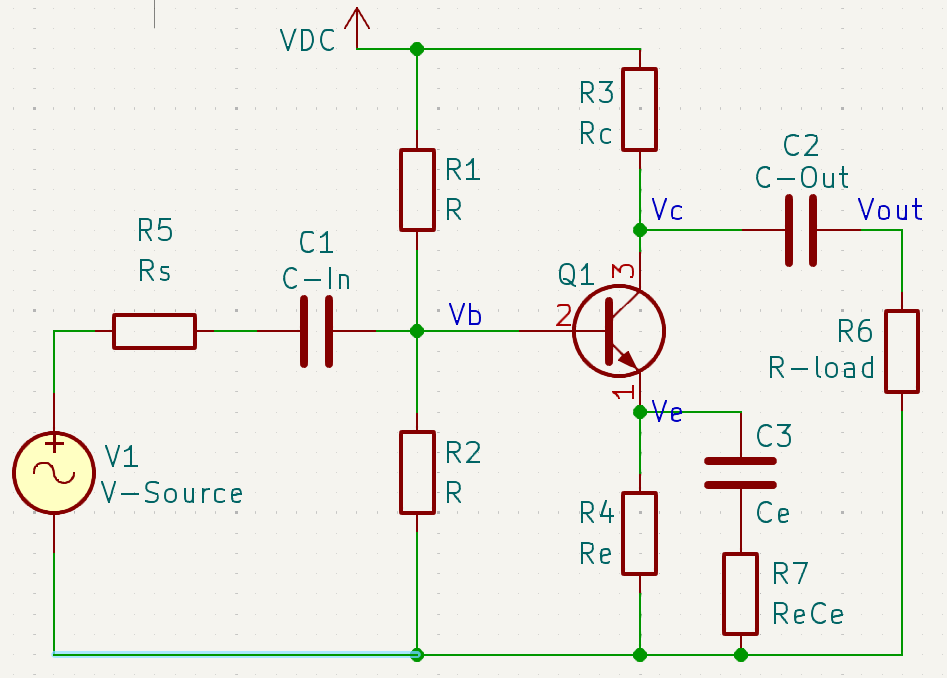
Amplifier Schematic
×

There are different ways to calculate an amplifier, depending on what you want to achieve.

Maybe you want to achieve a certain gain, as far as possible (classic mode). Or you have a low Vcc to respect (modern mode). Or you work with analog audio amps (symmetry mode).

Depending on what you want to achieve and the way of calculating it. Some fields might become dependent on others, or the other way around.

Your above choise makes some input fields available for manipulation, while hiding others.


🎯 1. Target Gain (Av) — "Classic mode" Advanced Android-x86 Installer For Windows V1.8 Download

You care about how much your amplifier multiplies the input signal.

Set desired voltage gain and Rc voltage drop. Best for learning and simple amplifiers.

You say: “I want a gain of 10.”
The app adjusts resistors to try and match that.
You must give Av and Vrc (the voltage dropped across Rc).

Best for common emitter amplifiers.

✅ Default choice for most beginners and educational use. | Feature | AAXI V1


⚡ 2. Target Emitter Voltage (Ve) — "Modern mode"

You care about setting a healthy DC bias point.

Prioritize stable biasing via Ve. Useful for low-voltage circuits or precision designs.

You say: “I want Ve = 0.5 V, to keep the transistor out of trouble.”
This makes sure your transistor stays in active mode.
Gain becomes whatever it turns out to be.

Ideal for common emitter amplifiers when the goal is to ensure proper biasing for low-voltage or precision circuits, and it’s also used in class AB amplifiers to prevent distortion Enter the

✅ Useful in low-voltage designs (e.g., 3.3V systems).


🧭 3. Target Collector Voltage (Vc) — "Symmetry mode"

You want to place the collector in the middle of the power rail.

Target Vc = Vcc/2 for maximum signal swing. Great for audio and analog signals.

You say: “Make Vc = Vcc/2” for maximum swing.
Useful for analog audio amps or symmetrical headroom.
Gain and Ve are outcomes.

Best for common collector amplifiers and class AB amplifiers.

✅ Best for signal integrity.

Advanced Android-x86 Installer For Windows V1.8 Download Link

| Feature | AAXI V1.8 | Bliss OS Installer | Official ISO Method | | :--- | :--- | :--- | :--- | | | Excellent | Good | None | | NTFS support | Yes | Limited | No | | UEFI/Secure Boot | Partial (with tweaks) | Full | Manual only | | Uninstaller | Yes | Yes | No (manual partition delete) | | Ease of use | Very Easy | Moderate | Complex |

In the ever-evolving landscape of operating systems, the line between mobile and desktop computing continues to blur. For years, enthusiasts and developers have sought a seamless way to run Android on standard x86 hardware (Intel/AMD processors). While official projects like Android-x86 have made this possible, the traditional installation process—involving partitioning, GRUB bootloader configuration, and ISO burning—has remained a daunting barrier for the average user.

Enter the . This tool has revolutionized how we install Android on PCs and tablets. It is the missing bridge between the complex world of Linux-based bootloaders and the user-friendly environment of Windows.

bcdedit /set android path \Android\android.boot (Note: android should be the specific identifier shown in bcdedit /enum ). Fix: The Android-x86 project has limited driver support. Use an Ethernet-to-USB adapter or external USB Wi-Fi dongle (Chipset: Realtek RTL8188EU works well). For audio, try using Bluetooth headphones. Advanced Android-x86 Installer V1.8 vs. Competitors How does V1.8 stack up against modern alternatives?

Perform a safe search for "Advanced Android-x86 Installer for Windows V1.8 download" on GitHub or SourceForge, grab your favorite Android ISO, and get started today. Have questions or success stories? Share them in the XDA-Developers forum thread dedicated to this installer. Happy dual-booting!